The large format graphics industry continues to evolve, giving print service providers more options than ever when selecting production technology. Whether you’re producing vehicle wraps, retail graphics, signage, wall coverings, or specialty applications, understanding the differences between UV, latex, and eco-solvent printing is critical to maximizing productivity, profitability, and print quality.
Each technology offers distinct advantages, and the best choice often depends on the applications you produce, the substrates you print on, and the operational requirements of your business.
Why Print Technology Matters
Today’s customers expect vibrant color, exceptional durability, faster turnaround times, and sustainable production practices. Meeting these expectations requires selecting the right combination of printer, ink, media, and finishing workflow.
While UV, latex, and eco-solvent technologies all produce high-quality graphics, they achieve results through different ink chemistries and curing processes, leading to significant differences in performance and application suitability.
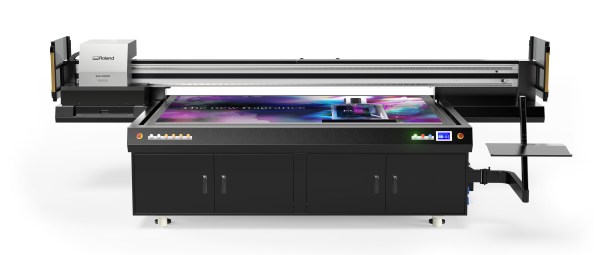
UV Printing
UV printing uses inks that cure instantly when exposed to ultraviolet light. As the print progresses, UV lamps mounted on the carriage immediately harden the ink, creating a durable image on the surface of the media.
Key Advantages of UV Printing
One of UV technology’s greatest strengths is exceptional material versatility and its ability to print on a wide range of substrates, including:
- Rigid boards
- Acrylic
- PVC
- Aluminum composite panels
- Glass
- Wood
- Corrugated plastics
- Foam board
- Flexible roll media
Because the ink cures on the surface rather than being absorbed into the substrate, UV printers can handle materials that other technologies cannot.
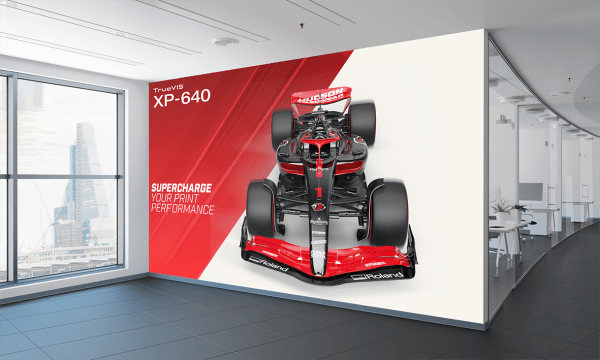
Photo of wall graphics printed on TrueVIS XP-640
Instant Drying
UV prints are ready for finishing immediately after printing. There is no outgassing period and minimal waiting time before cutting, laminating, or shipping.
This can significantly improve production throughput for busy print operations.
Durability
UV prints offer excellent resistance to:
- Scratching
- Chemicals
- Moisture
- Outdoor exposure
Many applications can be used without lamination, reducing material and finishing costs.
Specialty Effects
UV technology enables unique applications such as:
- White ink printing
- Clear varnish layers
- Texture effects
- Raised graphics
- Multi-layer printing
These capabilities help print providers create high-value products that differentiate their offerings.
Potential Limitations
UV inks tend to sit on top of the media surface, resulting in a slightly stiffer ink layer. For demanding applications such as vehicle wraps, this can sometimes reduce flexibility compared to latex or eco-solvent systems.
Additionally, UV printers often require a larger upfront investment and regular maintenance to ensure optimal curing performance.
Ideal Applications
UV printing is particularly well suited for:
- Rigid signage
- Retail displays
- Point-of-purchase graphics
- Interior décor
- Industrial graphics
- Architectural applications
- Short-run specialty products
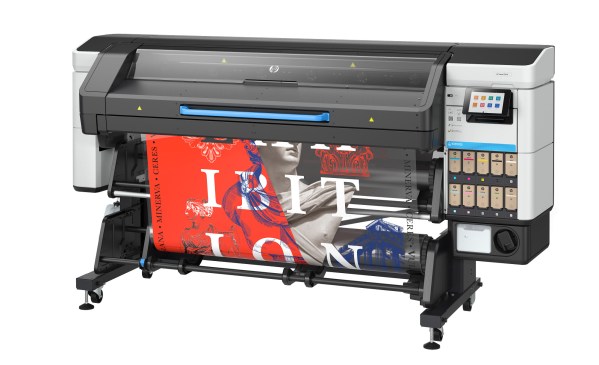
To shop UV printers at Spandex, click here.
Latex Printing
Latex printing uses water-based inks containing polymer particles that are cured using heat. During the curing process, the water evaporates and the latex polymers form a durable film on the media surface.
Over the past decade, latex technology has become a popular choice among sign and graphics providers seeking versatility and environmental benefits.
Key Advantages of Latex Printing
Modern latex printers produce excellent print quality:
- Sharp text
- Smooth gradients
- Vibrant colors
- Consistent image quality
This makes them suitable for both close-viewing graphics and high-impact displays.
Environmental Benefits
Latex inks are water-based and are often viewed as a more environmentally conscious alternative to traditional solvent technologies.
Benefits include:
- Reduced odor
- Lower volatile organic compound (VOC) emissions
- Improved workplace environment
- Compatibility with many indoor-sensitive spaces
Immediate Finishing
Unlike traditional solvent printing, latex graphics are fully cured when they leave the printer and can be laminated or installed immediately.
This reduces production bottlenecks and shortens delivery times.
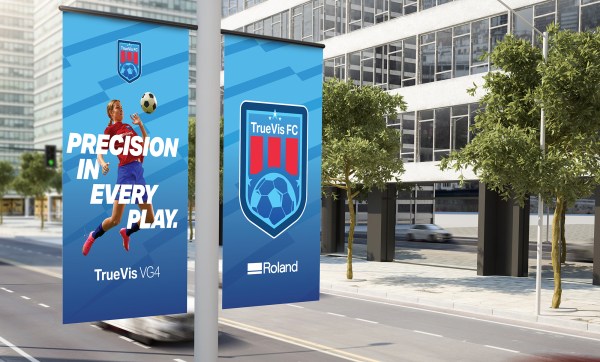
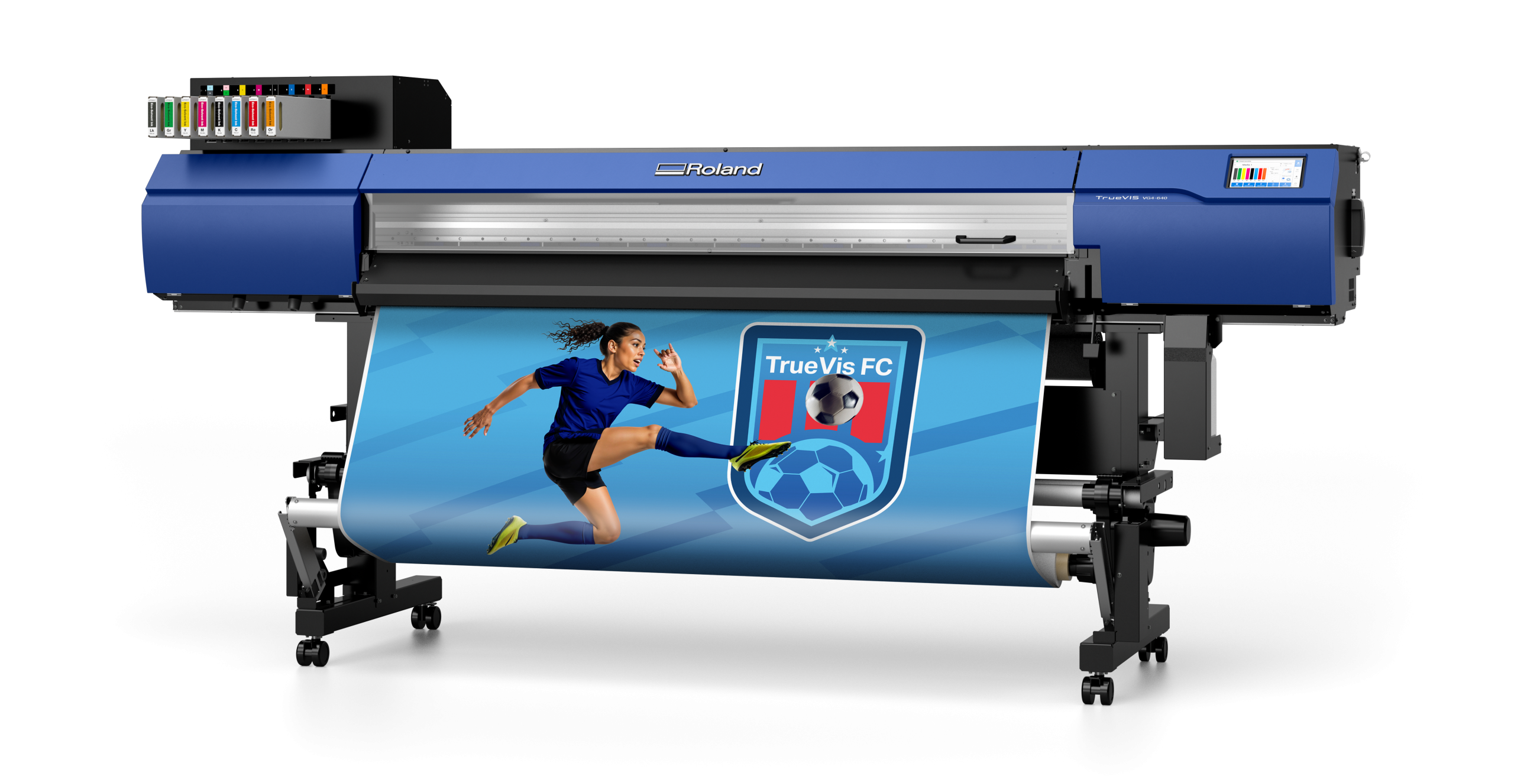
Photo of banners printed with TrueVIS VG4
Broad Media Compatibility
Latex technology performs well on many common graphics substrates, including:
- Self-adhesive vinyl
- Banners
- Wallcoverings
- Canvas
- Polyester fabrics
- Backlit films
Vehicle Graphics Performance
Latex inks offer excellent flexibility, making them highly effective for:
- Vehicle wraps
- Fleet graphics
- Curved surfaces
- Complex installations
Potential Limitations
The curing process requires heat, which can affect certain heat-sensitive materials if not properly managed.
In some specialty rigid applications, UV technology may offer broader substrate compatibility.
Ideal Applications
Latex printing excels in:
- Vehicle wraps
- Wall coverings
- Retail graphics
- Window graphics
- Fleet branding
- Indoor décor
- Event and exhibition graphics
To shop Latex printers at Spandex, click here.
Eco-Solvent Printing
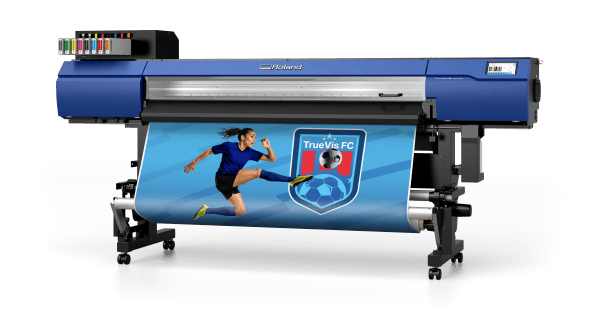
Eco-solvent printing evolved from traditional solvent technology by using milder solvents with lower odor and reduced environmental impact.
Eco-solvent systems remain a popular choice for many sign shops because of their combination of image quality, durability, and affordability.
Key Advantages of Eco-Solvent Printing
Eco-solvent prints deliver strong durability for outdoor applications, particularly when laminated.
They are widely used for:
- Outdoor signage
- Vehicle graphics
- Promotional displays
- General-purpose graphics
Eco-solvent systems are known for excellent color reproduction:
- Rich blacks
- Vibrant colors
- Smooth gradients
- High-resolution output
Many print professionals continue to favor eco-solvent for applications where color accuracy and image quality are critical.
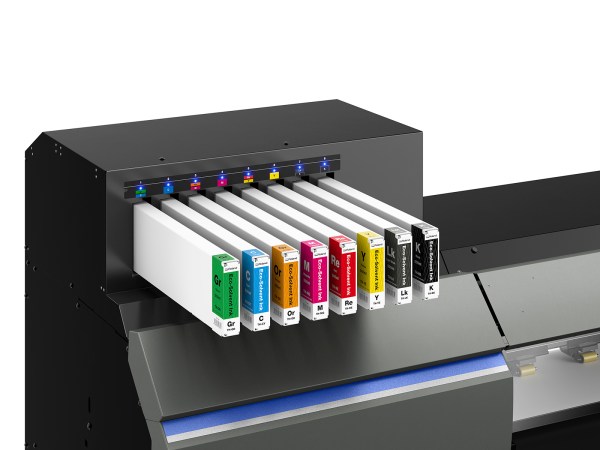
Photo of Eco-Solvent inks for XP-640
Lower Equipment Investment
Compared to many industrial UV systems, eco-solvent printers generally have lower acquisition costs, making them attractive for small and mid-sized print providers.
Strong Vinyl Performance
Eco-solvent inks slightly penetrate the vinyl surface, creating excellent adhesion and flexibility for adhesive graphics.
Potential Limitations
Unlike UV and latex technologies, eco-solvent prints typically require an outgassing period before lamination.
This waiting period can range from several hours to a full day, depending on the application and production environment.
Additionally, solvent inks generally produce more odor than latex systems and may require enhanced ventilation.
Ideal Applications
Eco-solvent remains a strong choice for:
- Vehicle graphics
- Decals
- Stickers
- Signage
- Window graphics
- Promotional graphics
- Short-to-medium production environments
To shop Eco-Solvent printers at Spandex, click here.

UV Printing is best for:
- Rigid media
- Specialty effects
- Industrial applications
- High-value graphics
UV Printing Key Strengths:
- Instant curing
- Broad substrate compatibility
- White ink and varnish options
- Exceptional durability
Latex Printing is best for:
- Versatile sign production
- Wall coverings
- Vehicle wraps
- Indoor environments
Latex Key Strengths:
- Water-based inks
- Immediate finishing
- Strong environmental profile
- Excellent flexibility
Eco-Solvent Printing is best for:
- Cost-conscious operations
- Vinyl graphics
- Outdoor signage
- General commercial printing
Eco-Solvent Key Strengths:
- Lower equipment costs
- Strong color performance
- Proven outdoor durability
- Reliable production workflow

Which Technology Is Right for Your Business?
The reality is that there is no single “best” print technology. The optimal choice depends on your business model and target applications.
If your shop specializes in rigid signs, industrial graphics, or premium visual effects, UV technology may offer the greatest opportunity.
If vehicle wraps, wall coverings, and environmentally conscious production are priorities, latex printing provides exceptional versatility.
If you’re looking for a cost-effective production platform with excellent graphics quality and strong outdoor performance, eco-solvent remains a dependable solution.
Many successful print providers operate multiple technologies, leveraging the strengths of each to maximize productivity and capture a broader range of applications.
Final Thoughts
The large format printing industry continues to innovate, but UV, latex, and eco-solvent technologies remain the foundation of modern sign and graphics production. Understanding how each system performs across durability, media compatibility, finishing requirements, and application versatility enables print businesses to make smarter equipment investments and deliver better outcomes for customers.
Ultimately, the most successful print providers are not defined by the technology they own, but by how effectively they match the right technology to the right application.
At Spandex, we sell all types of printers, media and inks. Contact us today to explore the right printing equipment for your business, you can reach our sales team at 801-262-6451 or visit our website www.spandex.us.
Click to shop digital inks | Click to shop digital media | Click to shop laminates